A designer is responsible for the work they put into the world.
Design is a discipline of action. You are responsible for what you put into the world. It has your name on it. And while it is certainly impossible to predict how any of your work may be used, it shouldn’t be a surprise when work that is meant to hurt someone fulfills its mission. We cannot be surprised when a gun we designed kills someone. We cannot be surprised when a database we designed to catalog immigrants gets those immigrants deported. When we knowingly produce work that is intended to harm, we are abdicating our responsibility. When we ignorantly produce work that harms others because we didn’t consider the full ramifications of that work, we are doubly guilty.
The work you bring into the world is your legacy. It will outlive you. And it will speak for you.
A designer values impact over form.
We need to fear the consequences of our work more than we love the cleverness of our ideas.
Design does not exist in a vacuum. Society is the biggest system we can impact and everything you do is a part of that system, good and bad. Ultimately we must judge the value of our work based on that impact, rather than any aesthetic considerations. An object that is designed to harm people cannot be said to be well-designed, no matter how aesthetically pleasing it might be, because to design it well is to design it to harm others. Nothing a totalitarian regime designs is well-designed because it has been designed by a totalitarian regime.
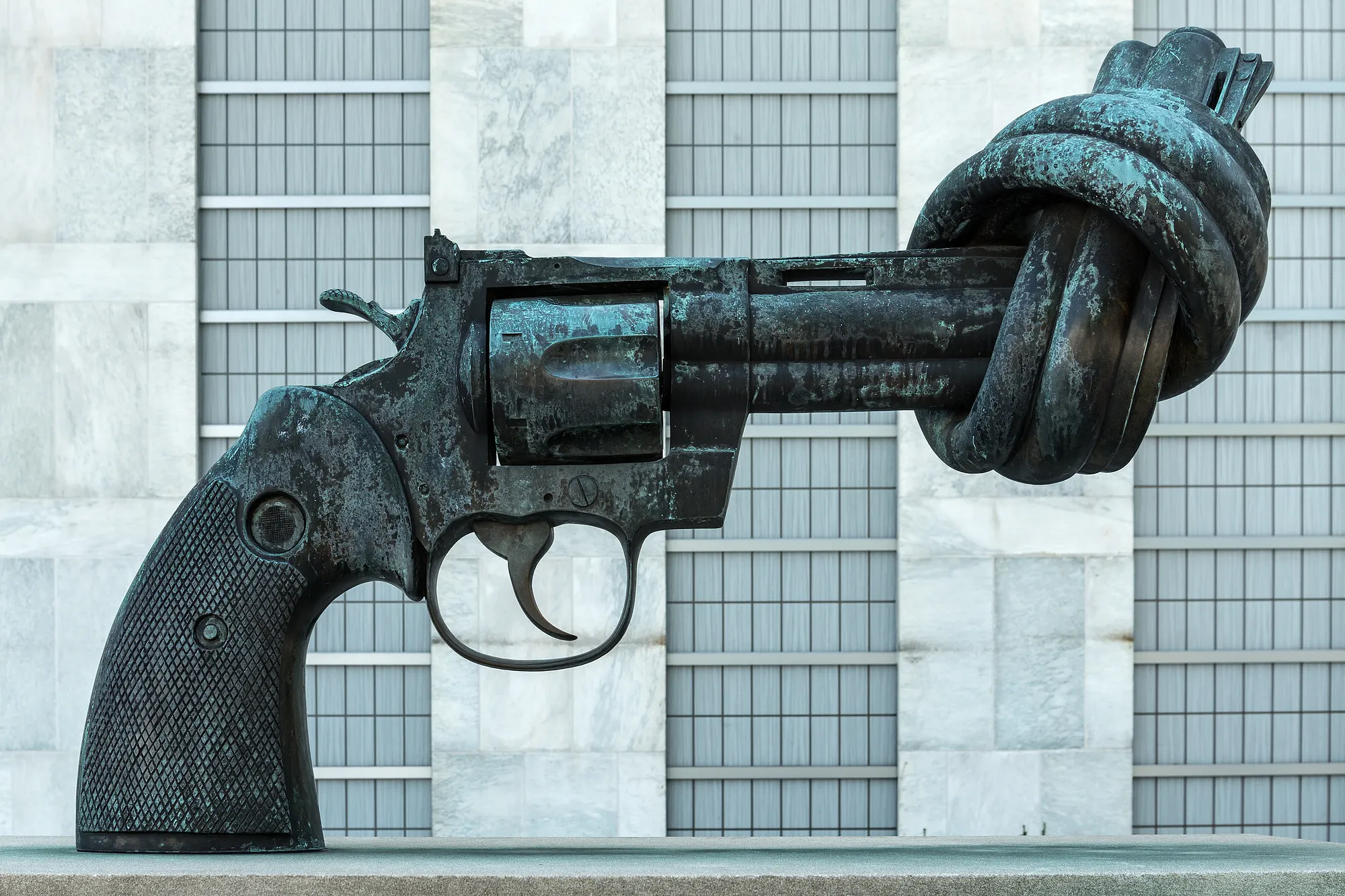
A broken gun is better designed than a working gun.
A designer owes the people who hire them not just their labor, but their counsel.
When you are hired to design something, you are hired for your expertise. Your job is not just to produce that work but to evaluate the impact of that work. Your job is to relay the impact of that work to your client or employer. And should that impact be negative, it is your job to relay that to your client along with a way, if possible, to eliminate the negative impact of the work. If it’s impossible to eliminate the negative impact of the work, it’s your job to stop it from seeing the light of day. In other words, you’re not hired to just dig a ditch, but to evaluate the economic, sociological, and ecological impact of that ditch. If the ditch fails those tests, it’s your job to destroy the shovels.
A designer uses their expertise in the service of others without being a servant. Saying no is a design skill. Asking why is a design skill. Rolling your eyes is not. Asking ourselves why we are making something is an infinitely better question than asking ourselves whether we can make it.